

How the Right Meeting Environment Can Make Strategic Planning More Productive
by MIT Endicott HouseStrategic planning requires something that can be difficult to find during an ordinary workday: time and space to think about the bigger picture.
When leadership teams attempt strategic planning in the same environment where they answer emails, take calls, manage employees, and handle everyday responsibilities, it can be difficult to shift from immediate concerns to long-term thinking.
That’s one reason organizations hold strategic planning retreats and offsite meetings. Moving the conversation outside the team’s normal working environment can create a clearer separation between day-to-day operations and the larger questions the organization needs to address.
But simply leaving the office doesn’t guarantee a productive retreat. The environment you choose—and the way you structure the meeting—can make a significant difference.
Why Environment Matters During Strategic Planning
Strategic planning isn’t an ordinary staff meeting. Teams may be making decisions about organizational priorities, growth, budgets, new initiatives, leadership, or the future direction of the company.
That requires concentration, collaboration, candid conversation, and often creative thinking.
Research supports the idea that our physical surroundings can influence those processes. A 2023 review examining 33 studies on physical environments and creativity concluded that the physical environment can affect creativity and innovation. Researchers identified factors such as privacy, natural elements, visual stimulation, social spaces, spatial variety, and areas for recharging among environmental characteristics associated with creative work.
The authors summarized the research by noting:
“The physical environment helps one’s creativity flourish.”
For a strategic planning retreat, that makes the choice of venue more than a logistical decision. The meeting environment becomes part of the planning process itself.
1. Getting Away Helps Create a Different Kind of Conversation
The purpose of a strategic planning retreat is often to discuss issues that don’t receive enough attention during normal operations.
Where are we going?
What should our priorities be?
What opportunities are we missing?
What needs to change?
What should we stop doing?
What will success look like three or five years from now?
An offsite setting creates a natural boundary between these conversations and the normal workday.
Harvard Business Review authors Bob Frisch and Logan Chandler describe the strategy offsite as a place where “the most essential conversations for the future of the business occur.”
Getting away from the normal office doesn’t automatically produce better strategy, however. Their research and experience also emphasize that successful offsites require careful preparation, a focused agenda, clear decision points, and follow-through after the meeting.
The lesson: A great environment supports strategic thinking, but it works best when paired with a thoughtfully designed meeting.
2. Fewer Everyday Distractions Can Help Teams Stay Focused
Strategic conversations require sustained attention.
In the office, participants may be tempted to return to their desks between sessions, answer emails, check on projects, or deal with issues that arise during the day.
A dedicated strategic planning retreat creates an opportunity to temporarily make strategy the team’s primary responsibility.
When choosing a venue, look for an environment that allows participants to remain together throughout the meeting, with comfortable meeting rooms, breakout areas, meals, refreshments, and other necessities readily available.
The goal isn’t simply to get people out of the office. It’s to create conditions where they can stay mentally present.
3. Face-to-Face Interaction Can Encourage Idea Generation
For teams that spend much of their time communicating virtually, a strategic retreat can also provide valuable face-to-face interaction.
A 2024 study published in Scientific Reports compared face-to-face interaction, video conferencing, and virtual reality in a professional setting. Researchers found that face-to-face interaction performed particularly well for idea generation and task absorption, while traditional video conferencing produced lower levels of engagement in those areas.
That distinction can be particularly important during strategy sessions.
Strategic planning often involves brainstorming, challenging assumptions, building on other people’s ideas, and reaching consensus around difficult decisions. Being physically together gives teams opportunities for both formal discussion and the informal conversations that happen between sessions.
4. Different Spaces Can Support Different Types of Thinking
A productive strategic planning retreat doesn’t necessarily happen around one conference table for eight straight hours.
Different stages of the process may require different environments.
A full-group discussion may work best in a traditional meeting room. Small teams may need breakout areas. Individual participants may benefit from quiet spaces to think before returning to the group. Meals and breaks can create opportunities for less structured conversations.
Research examining workplace design has found connections between space variety and creative work. One study of multidisciplinary teams found that satisfaction with meeting rooms and the work environment was associated with team effectiveness and creativity, while researchers suggested that a variety of spaces can help support team creativity.
A broader review of research into creativity and physical environments similarly identified social spaces, recharging spaces, mixed-use areas, and balanced layouts among the types of environments that may support creative processes.
When evaluating a retreat venue, don’t look only at the primary meeting room. Consider how the entire property can support the different ways your team needs to work.
5. The Right Setting Can Encourage Collaboration
Strategic planning shouldn’t be one person presenting a plan while everyone else listens.
The most valuable retreats encourage participation.
Research into workplace meetings identifies meetings as an important setting for organizational collaboration, communication, employee voice, participation, leadership, and team processes.
Research specifically examining strategy workshops also suggests that meeting design matters. A study involving more than 650 strategy workshops found that factors including clarity of goals and purpose, stakeholder involvement, cognitive effort, and the way workshops were structured were associated with different organizational, interpersonal, and cognitive outcomes.
In other words, productive strategic planning requires both the right people and the right conditions for those people to participate.
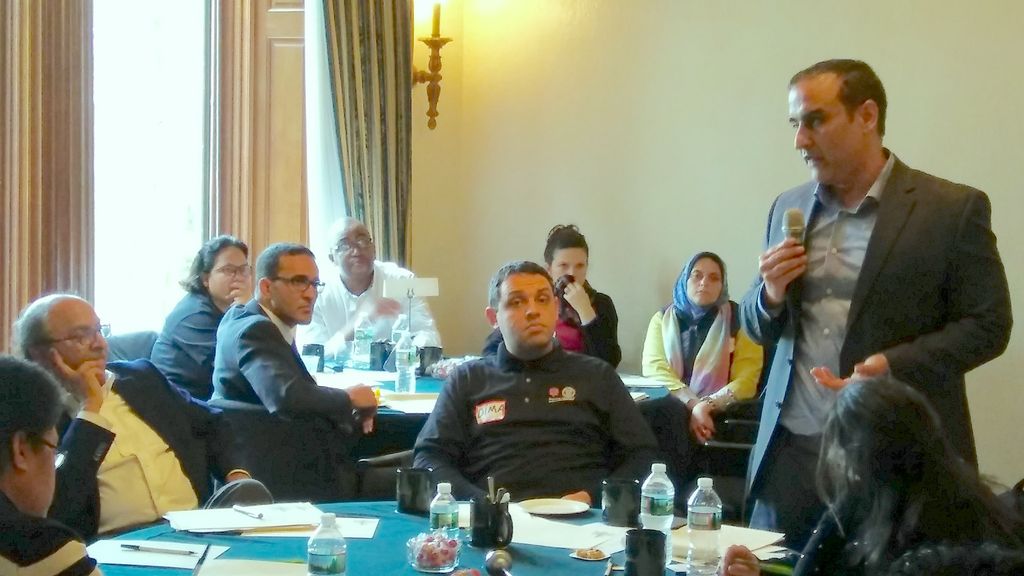
6. Breaks and Informal Time Are Part of the Retreat
Some of the most valuable conversations during an executive retreat don’t happen during a scheduled presentation.
They happen over coffee.
During lunch.
On a walk between sessions.
Or when two people continue discussing an idea after the formal meeting has ended.
That’s another reason the overall retreat environment matters.
A venue that offers spaces beyond the conference room gives participants opportunities to continue conversations in different ways. Outdoor areas, lounges, dining spaces, and smaller gathering areas can complement the structured portions of the agenda.
These aren’t necessarily distractions from strategic planning. Used intentionally, they can become part of it.
7. Overnight Retreats Can Create More Time for Deeper Work
Some strategic planning meetings can be accomplished in a single day. Others benefit from an overnight format.
An overnight retreat can allow organizations to create a more relaxed schedule rather than trying to fit every important conversation into a few hours.
Teams might use the first day to evaluate where the organization stands today, identify challenges, and generate ideas. After an evening together and time to reflect, the second day can focus on priorities, decisions, responsibilities, and next steps.
On-site accommodations can also eliminate the disruption of sending participants to different hotels at the end of the day and bringing everyone back together the following morning.
What Should You Look for in a Strategic Planning Retreat Venue?
When evaluating potential locations, consider more than the size of the meeting room.
Look for a venue that can support the complete planning experience, including:
- Comfortable meeting rooms appropriate for your group size
- Breakout spaces for smaller discussions
- Reliable audiovisual and presentation technology
- Strong Wi-Fi connectivity
- Comfortable spaces for breaks and informal conversations
- Food and beverage options
- Outdoor areas or opportunities to step away between sessions
- Overnight accommodations when needed
- Privacy for confidential leadership discussions
- Professional meeting support
- Convenient access for participants
Most importantly, choose a setting that feels different enough from the everyday workplace to signal:
We’re here to think differently.
Strategic Planning Retreats Near Boston
For organizations in Boston and throughout New England, holding a retreat outside the city can provide the separation of an offsite without requiring extensive travel.
MIT Endicott House in Dedham, Massachusetts offers a distinctive setting for executive meetings, leadership retreats, and strategic planning sessions just outside Boston.
Rather than meeting in a traditional downtown hotel environment, teams can gather on a private estate where meeting space, dining, accommodations, and opportunities for informal conversation are available within one setting.
That combination can be particularly valuable for organizations planning multi-session meetings or overnight leadership retreats.
A Productive Retreat Starts Before Everyone Arrives
The venue matters, but it isn’t the only ingredient in a successful strategic planning retreat.
Before the meeting, establish:
- The specific questions the retreat needs to answer
- Who needs to participate
- What information participants should review beforehand
- Which decisions need to be made
- How much time should be dedicated to discussion versus presentations
- Who will facilitate each part of the meeting
- What deliverables should exist when the retreat ends
As Frisch and Chandler’s work on strategy offsites emphasizes, preparation and structure are essential. A beautiful location cannot compensate for an unclear purpose or an unfocused agenda.
But when a well-designed agenda is paired with an environment that supports concentration, collaboration, conversation, and creative thinking, a strategic planning retreat can become much more than another meeting.
It can give leadership the space to determine where the organization goes next.
Planning a Strategic Retreat Near Boston?
If your team needs to step away from everyday demands and focus on the future, MIT Endicott House offers a setting designed for productive meetings, leadership conversations, and meaningful time together.
Ready to start planning your strategic planning retreat? Contact MIT Endicott House to explore meeting spaces, accommodations, dining, and retreat options for your organization.
Discover Your Perfect Meeting Package In A Few Simple Questions
Recent Blogs

Offsite Holiday Parties: Are they worth it?
Offsite holiday parties create a clear break from the office and make the gathering feel intentional rather than routine.

Return to Work Mandates Are Rising, But Teams Still Need Flexibility
Return to work mandates are back in the conversation. Is a fully in-person model the right move? Or is hybrid the better long-term fit?

AI Expert Spotlight: Simon Johnson
Nobel Prize-Winner Simon Johnson was recently featured in MIT Sloan Ideas Made to Matter, which spotlighted his work on the economics and politics of artificial intelligence. The article explains how Johnson’s Shaping the Future of Work initiative urges business and...
Sources
- Frisch, Bob & Logan Chandler. Off-Sites That Work. Harvard Business Review.
- Murugavel, Vignesh R. & Roni Reiter-Palmon. Integrating Workplace Meetings and Team Creative Process Literature: A Multi-Level Perspective. Organizational Psychology Review.
- Macchi, Gregorio et al. Research comparing face-to-face, video conferencing, and virtual reality workplace interaction, published in Scientific Reports.
- Relationships Between Physical Environments and Creativity: A Scoping Review. Thinking Skills and Creativity.
- Healey et al. Off to Plan or Out to Lunch? Relationships Between Design Characteristics and Outcomes of Strategy Workshops. British Journal of Management.