
Building Better Meetings Through Awareness
by MIT Endicott HouseNot all meetings are created equal, and not every red flag comes with a warning sign. As a planner or facilitator, you can sometimes nail every aspect of a meeting from beginning to end, but still walk away wondering why nothing actually changed. According to a recent article from MIT Sloan Management Review, it might not be the content of your meeting – it might be the dynamics in the room.
While it’s tempting to focus exclusively on agenda and outcomes, highly effective leaders take on a third role: that of observer. Watching how people interact in your meetings—who speaks, who stays quiet, who tunes out—can offer powerful insight into whether your meeting is actually productive, or just checking a box.
Here are three subtle, but critical, signs to watch for in your next meeting or retreat, and what to do to combat these common meeting pitfalls:
1. Everyone’s “There”, But Not Really Present
You know these warning signs. Cameras on, eyes glazed over. Or worse, the work on an attendee’s phone becoming more pressing than the actual meeting happening. When you can tell the people in the room are no longer fully paying attention, it can leave everyone feeling that the conversation doesn’t actually matter.
What to do: For longer meetings, build in structured engagement points. Plan moments for breakout discussion, open Q&A, or even a stretch break. Small, humanizing elements help pull people back into the moment by allowing a short minute to reset.
2. A Few People Do All the Talking
When two or three voices dominate a meeting, others retreat. Sometimes it’s a question of personality; other times, it’s about organizational culture. When team members find that they aren’t listened to (or have to fight for time to speak in the first place), they can feel their input isn’t valued. And when everyone isn’t heard, your meeting misses its full potential.
The Sloan article points out that marginalized voices are a key red flag in meeting quality. Left unchecked, this imbalance can lead to poor decisions and disengaged teams.
What to do: As a leader or facilitator, create space intentionally. Ask quieter participants for their input. Use round-robin formats, small group discussion, or anonymous idea collection tools to ensure every perspective gets airtime, especially from those participants who are naturally quieter.
3. Everyone Agrees… Or Do They?
Unanimous “yes” responses can feel like a win, but they may be masking unresolved tension or disagreement. According to Sloan, this kind of faux consensus is especially dangerous because it creates a false sense of alignment, which prevents a leader from being able to address any issues. Teams might smile and nod in the room, only to walk out and continue working in silos, confusion, or quiet resistance.
What to do: Normalize healthy disagreement. Let your team know that pushback is expected, and create a safe space for it. One simple tactic: before moving forward on a decision, ask “Is there anything we are not considering?” or “Is there anything here that concerns anyone?”
The Bottom Line: Better Meetings Begin with Better Awareness
Meeting success isn’t just about the content you present—it’s also about the dynamic you create. That’s why smart planners and leaders don’t just run the room; they read the room. They pay attention not only to who’s talking, but to who’s not; not only to what’s said, but to what’s left unsaid.
And that kind of environment doesn’t happen by accident. It’s one reason so many forward-thinking organizations are moving important meetings, team retreats, and strategy sessions offsite. Getting out of your regular space signals to attendees that this time is different—and worth showing up for, fully.
If you’re planning your next high-stakes meeting or retreat, consider more than the topic. Think about the tone, the room setup, the structure for engagement, and especially what kind of space might allow for the clearest communication and most honest interaction.
Because ultimately, the best meetings aren’t just productive—they’re propelling.

Recent Blogs

Real New England Weddings: Heather Fry & Allan Konar
MIT Endicott House was recently featured in Boston Magazine, which profiled the wedding of Heather Fry and Allan Konar, who fell in love with the Dedham estate after taking a cooking class there and chose it as the romantic backdrop for their September celebration....
Tomorrow’s Computer, Yesterday
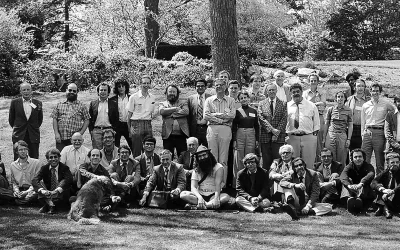
MIT Endicott House was recently featured in MIT Technology Review, which looked back at how the 1981 Physics of Computation Conference held at Endicott House helped launch the field of quantum computing. The article recounts the pivotal ideas shared there by Richard...

Leading Quantum at an Inflection Point
MIT Endicott House was recently featured in MIT News, which reported on how MIT’s new Quantum Initiative (QMIT) aims to harness emerging quantum capabilities at a critical inflection point for the field. The article explains how QMIT will unite researchers across MIT...